


Key Takeaways
- Small gaps around soffits, roof returns, vents, and utility lines can provide wildlife with access to concealed spaces.
- Animal signs become more useful when matched with structural damage and observed movement patterns.
- Trees and nearby structures can reveal how wildlife reaches otherwise difficult-to-spot openings.
- Effective exclusion requires confirming animal activity before sealing access points.
- Targeted repairs and ongoing maintenance can help prevent repeat intrusions.
Hearing scratching sounds above the ceiling does not reveal where an animal came in. It may have gotten in through a broken air duct, a space under the roof, or a hole behind the downspout.
Finding wildlife entry points in Tampa requires more than spotting holes in exterior walls. Wildlife specialists connect evidence inside the property with structural weaknesses outside, then determine which openings are actually being used.
1. Start With Rooflines, Soffits, and Fascia
This difference matters because closing a visible hole could leave the main problem unsolved if the entrance is not found.
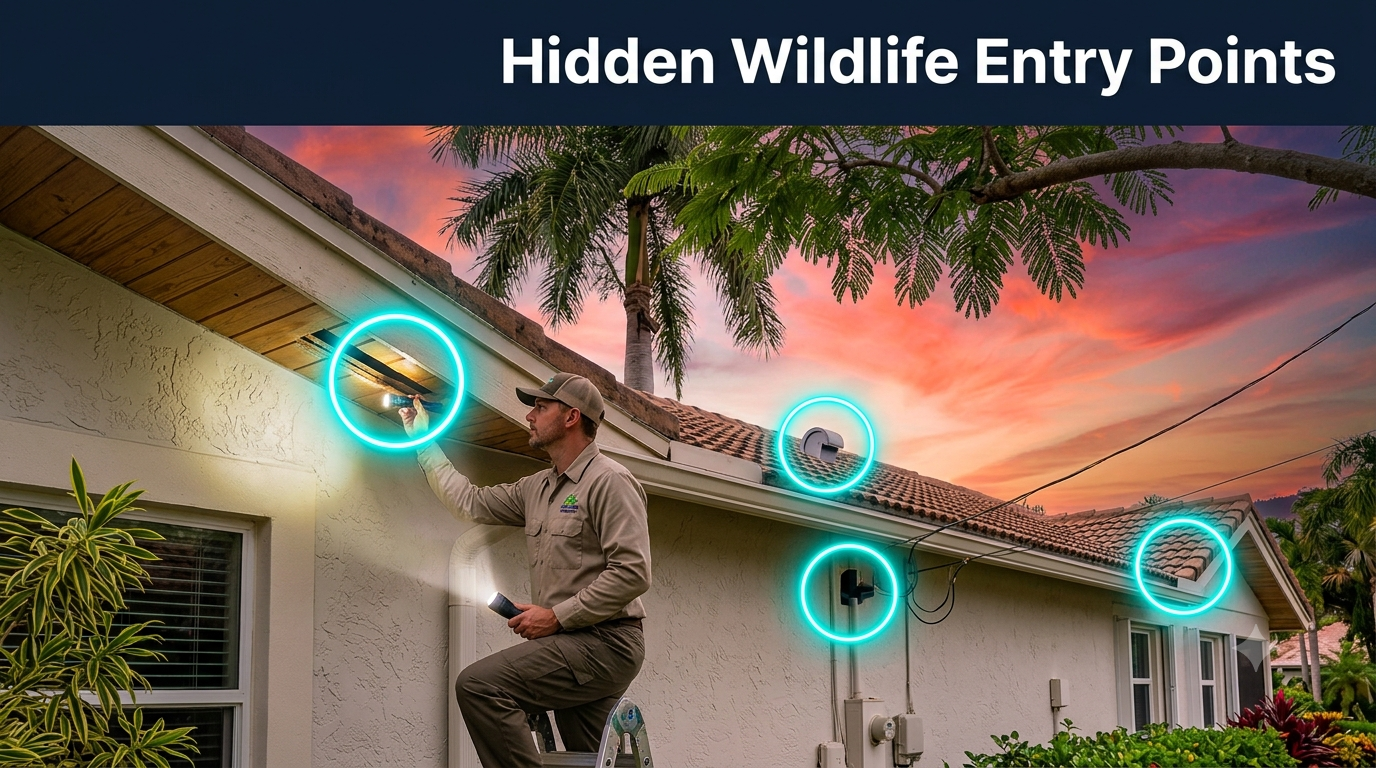
Roof edges are a priority because gaps around soffits, fascia boards, and roof returns can lead directly into attic spaces. Loose panels, deteriorated wood, lifted roofing materials, and storm damage may create access routes that are difficult to see from the ground.
Specialists look for displaced materials, scratches, gnaw marks, and damaged joints. They also check whether gutters or overhanging branches obscure vulnerable areas.
The goal is to determine whether a defect connects to an accessible interior space. Identifying roof wildlife damage in Tampa early can help homeowners address the opening and repair related damage before the problem escalates.
2. Check Vents and Gaps Around Utilities
There are some access points that are concealed in locations created for ventilation purposes or for services that are vital. The attic ventilators, outlets of exhaust, air gaps in chimneys or spaces around electrical wires can be at risk if the screen, seal, or cover has corroded.
Professionals assess whether protective mesh is intact and whether openings are properly secured. They also consider the size and position of a gap alongside evidence of animal activity.
The fact that the mesh is damaged does not indicate that the building is infested. However, if it is in accordance with the specific signs of the activity of the animal inside the building, it should be given some attention.
3. Match Animal Signs With Possible Entrances
Droppings, disturbed insulation, nesting material, gnaw marks, and scratching sounds can help narrow the search. Their location and pattern are often more informative than an isolated clue.
For example, repeated noises near a roof cavity combined with damage around a soffit may suggest a possible route into the attic. Activity near a garage could point toward a lower opening instead.
Wildlife specialists compare these observations with the building’s layout rather than relying on one sign alone. Homeowners can help by recording when noises occur and where activity is strongest. Avoid entering contaminated or unsafe spaces to investigate.
The Three-Point Verification Method
Before recommending repairs, wildlife specialists can assess a suspected entrance using three checks:
- Identify the opening. Look for gaps around soffits, damaged vent screens, loose fascia, or spaces around utility lines that could provide access to an attic, wall cavity, or crawl space.
- Match the evidence. Compare the opening with nearby signs of activity, such as disturbed insulation, droppings, scratches, or repeated noises. A visible gap alone does not confirm that wildlife is using it.
- Confirm the route. Determine whether the opening connects to the affected area and whether the animal may still be inside. This helps establish whether removal, exclusion, or structural repairs should happen first.
4. Trace Access From Trees and Nearby Structures
An animal may reach the roof without climbing the exterior wall. Overhanging branches, fences, sheds, and other nearby structures can provide routes toward elevated openings.
When conducting an exterior inspection, experts analyze how those parts interact with sensitive roof edges, as well as vents and panels. For instance, Tampa residences with mature vegetation can have important trees close to the roof line that should be taken into account.
By trimming trees appropriately, it is possible to minimize access to buildings, while keeping exterior structures well-groomed. However, these actions do not mean that animal problems can be eliminated without addressing the animal itself and its access points.
5. Confirm Activity Inside the Structure
Where safe and appropriate, a wildlife inspection in Tampa may include accessible attics, crawl spaces, and garages. Specialists look for nesting material, disturbed insulation, droppings, damaged wiring, and other signs that help establish where animals have been active.
These findings can connect an exterior opening to an affected area and reveal whether cleanup or repairs are necessary. They can also help determine whether an animal may still be inside.
Homeowners should avoid handling wildlife or entering hazardous enclosed spaces without appropriate precautions. Exposed wiring, unstable surfaces, and contaminated materials can create additional risks.
6. Plan Wildlife Exclusion Before Sealing Gaps
Finding an opening is only part of the solution. Permanently closing it before confirming that animals have left can trap wildlife inside or separate dependent young from adults.
Effective animal exclusion in Tampa involves choosing a suitable approach for the species, the building, and the activity observed. Repairs may include reinforcing soffits, securing vent covers, and closing confirmed access points after the animal issue has been resolved.
Bats require particular care because Florida restricts exclusion during their maternity season. The Florida Fish and Wildlife Conservation Commission’s guidance on bats in buildings explains the relevant timing and exclusion requirements.
Long-term wildlife prevention in Tampa also involves repairing storm damage, maintaining roof components, and reducing easy access from nearby structures. Prevention works best when it addresses the specific vulnerabilities found at the property.
Protect Your Tampa Home From Repeat Wildlife Intrusions
A recurring wildlife problem often begins with an overlooked opening. Connecting animal signs with structural defects helps identify where the problem starts and what needs to change.
If you hear scratching in your attic or notice damage around your roofline, contact Critter Control of Tampa to discuss a professional assessment. A specialist can help identify potential entry points and recommend appropriate removal, exclusion, and repair steps for your property.
Keep Wildlife Out of Your Tampa Attic
Not sure how animals are getting into your roof or attic? Arrange a local wildlife inspection to help identify entry points, assess damage, and plan the right removal and exclusion steps.
Schedule a Tampa Wildlife InspectionFrequently Asked Questions
Common access points include gaps around soffits and fascia boards, damaged roof edges, loose vent screens, chimney openings, and spaces around utility lines.
Scratching sounds, droppings, disturbed insulation, nesting material, and exterior damage may indicate activity. A professional assessment can help identify the likely source.
A professional assessment connects signs of animal activity with potential access points, identifies related damage, and helps determine whether removal or repairs should happen first.
Avoid sealing an opening if an animal is still inside. Doing so can trap wildlife in an attic or wall cavity. Some species also require specific handling and exclusion methods.
Maintain rooflines, repair damaged screens, seal appropriate exterior gaps, and trim branches that provide roof access. If wildlife has already entered, resolve the active problem before permanently closing the relevant openings.