

If raccoons, squirrels, rats, or other nuisance wildlife are getting into your Tampa home, there is an opening somewhere in the structure. Finding that opening is one of the most important parts of solving the problem. Professional animal removal should address not only the wildlife already inside, but also how it entered and what can be done to help prevent another intrusion.
Tampa’s warm climate keeps wildlife active throughout much of the year. Rooflines, vents, soffits, garages, and other exterior openings can provide shelter and access to attics, wall voids, and other protected spaces. Some entry points are obvious; others may be only a small construction gap or a weakened area that an animal has enlarged.
Why a Professional Wildlife Inspection Matters
A professional wildlife inspection looks for evidence of the animal, likely entry points, nesting areas, contamination, and damage associated with the infestation. Identifying the species matters because removal and exclusion methods vary by animal and by the circumstances inside the home.
Before an active opening is permanently secured, technicians also need to account for the wildlife inside. Closing an entry point too soon can trap an animal—or dependent young—inside the structure. A complete solution combines proper removal with exclusion work designed for the specific home and species involved.
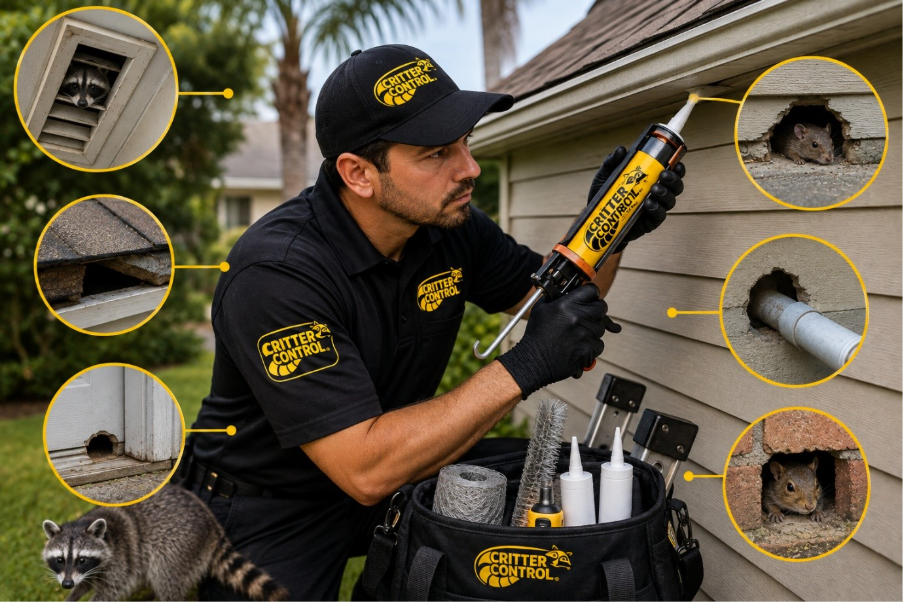
7 Common Wildlife Entry Points in Tampa Homes
1. Roof Vents and Damaged Vent Covers
Roof vents are frequent wildlife access points because they are exposed to sun, wind, rain, and storms. Covers can loosen or deteriorate over time, and raccoons may pull at weakened materials to gain access to an attic. During exclusion work, vulnerable vents can be protected with wildlife-resistant materials appropriate for the opening.
2. Soffit and Fascia Gaps
The soffit and fascia along the roof edge are common places to find gaps, deterioration, or animal damage. Squirrels and other wildlife can exploit surprisingly small openings and may enlarge weak areas through repeated use. These locations should be inspected carefully, especially when activity is heard near the roofline.
3. Chimneys and Unprotected Openings
Unprotected chimney openings can provide wildlife with a sheltered route into or onto a home. Depending on the structure and species involved, an appropriate chimney cap or other exclusion measure may help prevent access while allowing the chimney to function as intended.
4. Attic Fans, Louvers, and Gable Vents
Attic ventilation openings need airflow, but damaged screens or weak coverings can create wildlife access. Animals may push through, chew, or enlarge vulnerable areas. Professional exclusion protects these openings with materials that help resist wildlife while preserving necessary ventilation.
5. Roofline Gaps and Construction Openings
Small gaps where roof sections, trim, or building materials meet can become entry points. Wildlife may take advantage of an existing construction gap or enlarge a weakened area. These openings can be difficult to see from the ground, which is one reason a whole-home inspection is important.
6. Garage and Exterior Door Gaps
Gaps beneath or around garage doors and exterior doors can provide access for rodents and other small animals. Once inside a garage, wildlife may find additional routes into wall voids, ceilings, or attic areas. Weather seals and other vulnerable transition points should be checked as part of routine home maintenance.
7. Utility Penetrations and Lower-Level Openings
Openings around plumbing, electrical, HVAC, cable, and other utility penetrations can create access points, particularly for rodents. Foundation vents and accessible crawl-space openings can also be vulnerable where those features are present. Proper exclusion closes unnecessary gaps with materials suited to the location without interfering with utilities or required ventilation.
Animal Removal Is Only Part of the Solution
Removing the animal addresses the immediate problem, but it does not automatically prevent another animal from using the same opening. That is why Critter Control® focuses on identifying how wildlife entered and completing appropriate exclusion work after the animals have been safely removed.
Whole-home wildlife exclusion means looking beyond one obvious hole. Technicians inspect the exterior for current and potential access points and recommend exclusion measures based on the home, the species, and the condition of the structure. This may include securing vents, sealing gaps and utility penetrations, and reinforcing vulnerable wildlife entry points within the scope of our services.
What About Wildlife Damage?
Wildlife can contaminate insulation, damage vent covers and exclusion points, disturb ductwork, and leave droppings, urine, nesting material, and odors behind. Rodents may also gnaw on wiring and other materials.
Critter Control® technicians inspect for wildlife-related damage and contamination. We perform wildlife damage restoration, exclusion, attic cleanup, sanitization, deodorization, and insulation services within the scope of our work. When damage requires roofing, electrical, structural, HVAC, or other licensed trade work outside that scope, the appropriate qualified contractor should perform those repairs.
Attic Cleanup and Restoration After Wildlife Removal
An attic may still need attention after the wildlife is gone. Depending on the extent of contamination, restoration can include removal of affected insulation and nesting debris, sanitization, deodorization, and insulation replacement.
Addressing contaminated materials helps remove what the infestation left behind, while exclusion addresses how wildlife entered. Together, removal, exclusion, and restoration provide a more complete solution than trapping alone.
Helping Prevent Future Wildlife Problems
Tampa homes can develop new vulnerabilities over time, especially after storms, roof work, aging materials, or other changes to the exterior. Homeowners can help by watching for damaged vents and soffits, keeping tree limbs from providing easy roof access where practical, checking exterior door seals, and having suspicious openings inspected.
If you hear scratching, thumping, scurrying, or other unexplained noises, or notice droppings, odors, or exterior damage, an early inspection can help identify the problem before wildlife causes additional contamination or damage.
Need Professional Animal Removal in Tampa?
Critter Control® provides professional wildlife inspection, animal removal, exclusion, and wildlife damage restoration services for Tampa-area homeowners. Our technicians identify the animal, determine how it is getting inside, remove it using methods appropriate to the species and situation, and recommend exclusion measures to help prevent re-entry.
If you suspect wildlife is using your attic, walls, roofline, or another part of your home, contact Critter Control® to schedule a professional inspection and determine the right solution for your property.