



Imagine you are relaxing at home in the afternoon on a sunny day, and suddenly spot a wasp nest nearby. It can become a matter of concern; if they decide to build a nest next to your home, they quickly turn from “beneficial pollinators” into a real safety concern. The question arises. Wasps are experts at hiding their nests in places you might not identify, except under eaves, inside walls, or even underground in your lawn.
Let’s dive deep into how to safely spot signs of activity that can help you protect your family and property.
Where Wasps Commonly Nest—and Why Early Wasp Removal Matters
Wasps are smart when it comes to choosing a nest location. They usually seek warm, sheltered areas where they can raise their young and reproduce rapidly. That’s why you’ll often find them in roof parapets, attics, wall gaps, or even underground spaces.
In spring, the queen starts with a tiny nest, and it can expand to the size of a basketball.
Why deal with it early?
- A small nest is easier and safer to remove.
- The larger it gets, the more aggressive the wasps become.
- Removing wasps at an early stage will prevent larger wasp activity around your home.
If you see a small nest taking shape, the safest option is to call a professional wasp exterminator.
Indoor Nesting: Why Garages, Attics, and Wall Voids Attract Wasps
Dark, quiet peace that’s the kind of spots wasps crave. That’s why places like:
- Garages and sheds (open rafters and beams)
- Attics (warm, hidden spaces)
- Wall voids and crawl spaces (safe, hard-to-reach spots) are some of their favourite indoor nesting areas.
The danger here is that these nests often go unnoticed until they’re big, and by then, wasps may already be finding their way into your living space. Professional wasp control is the best way to clear them out safely.
Ground Nests and Garden Areas: A Hidden Risk Around Your Home
Not all wasps choose high spots for their nests. Some, like yellowjackets, prefer to build their nests underground. They’ll often take over old rodent burrows, dig into loose soil near garden beds, or even hide beneath concrete slabs.
The problem with ground nests is that they’re difficult to spot until it’s too late. You might walk over one while gardening or run the lawnmower nearby, and within seconds, dozens of angry wasps can swarm out to defend their home.
A simple way to tell if you have a ground nest is to watch for wasps repeatedly flying in and out of a small hole in the ground. If you see this, don’t try to check it out up close. Stay away from the area and call a professional wasp exterminator who can remove the nest safely.
What a Wasp Nest Looks Like and How to Stay Safe Around One
Wasp nests are very easy to identify.
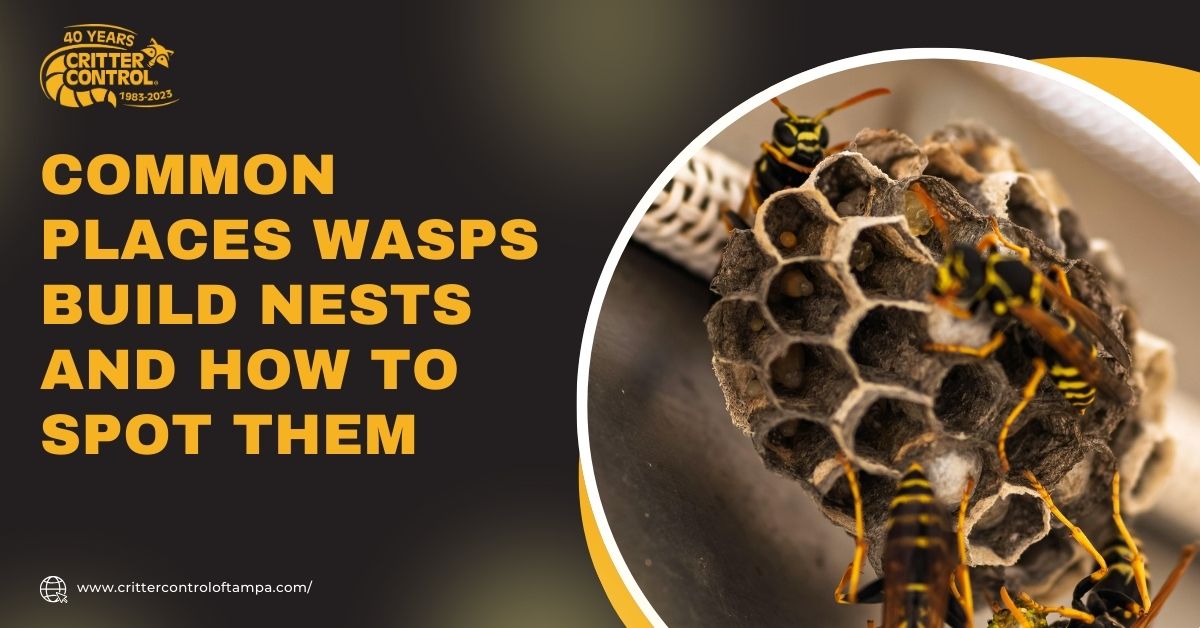
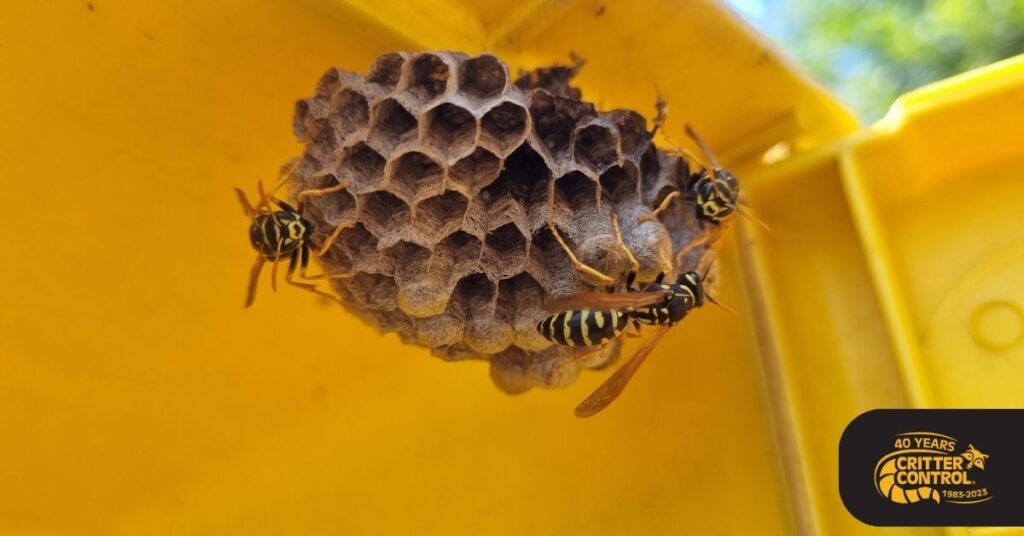
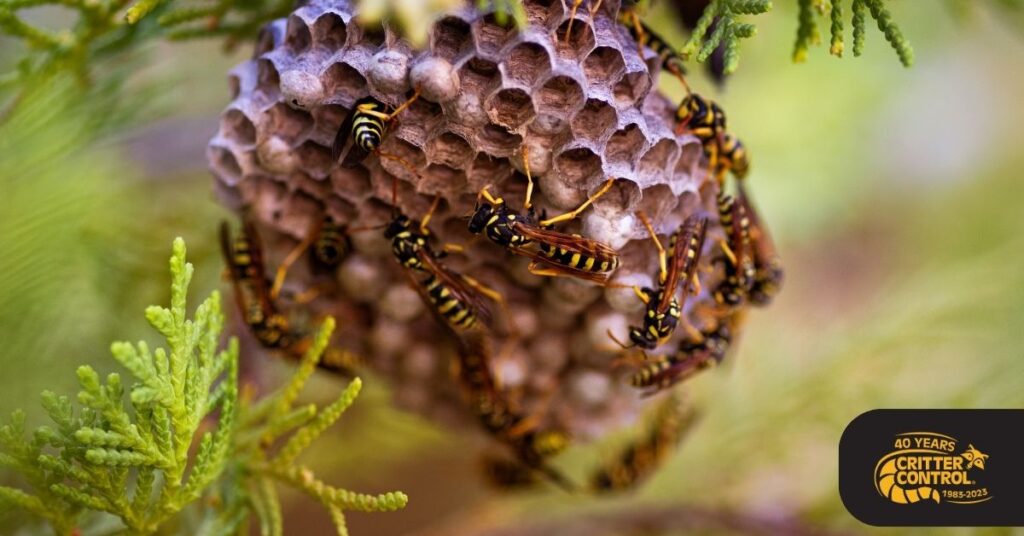
- Nests above ground: grey, paper-like, and round. They can be attached to trees, under eaves, or in the corner of a shed, and could be anywhere from the size of a golf ball in spring to the size of a basketball in summer.
- Ground nests: usually only visible as a hole in the ground, with wasps entering and exiting.
Safety first:
- Do not swat or disturb the nest.
- Keep pets and children away.
- Never spray DIY insecticidal sprays when the nest is large or hidden.
If you find a wasp nest, the safest option is to call a professional for removal, especially to avoid a painful sting.
Spotting Wasp Activity Without Confrontation: When to Call a Professional
It is not necessary to see the nest itself; the activity itself can sometimes give it away. Signs to look for that may indicate that there is a nest in the area:
- The wasps are repetitively flying to and from the same location.
- The buzzing sounds emanate from inside the walls or ceilings.
- Small, paper-like nests are appearing under roof edges or decks.
- Once you see one of these signs, don’t try to get close to investigate. Wasps will quickly become aggressive if they feel threatened.
Call a trained wasp exterminator to facilitate safe and effective wasp control. Exterminators will have the proper equipment and methodology to remove the nest without putting you or your family in danger.
Final Thoughts
Wasps can build nests in a surprising variety of settings indoors, underground, or dangling right above your front door. The sooner you find them, the easier they will be to deal with before they spread out to take over your property.
If you see wasp activity in and around your home, just relax! Maintain your distance and allow a professional to deal with the wasp removal. A professional wasp exterminator will ensure that the issue is handled quickly, safely, and efficiently so you can enjoy your home and yard again without worry.